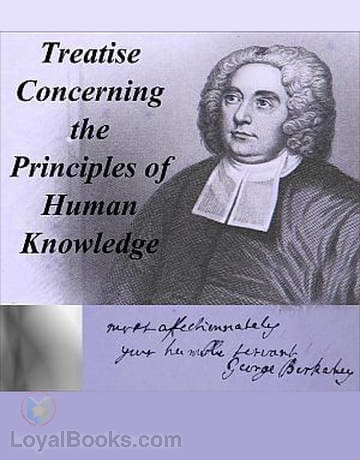
About this book
George Berkeley's A Treatise Concerning the Principles of Human Knowledge stands as one of philosophy's most audacious challenges to conventional thinking about reality itself. Published in 1710, this groundbreaking work presents the Irish empiricist's revolutionary argument that the material world exists solely as ideas in the mind—a bold refutation of John Locke's theory of perception that fundamentally reshapes how we understand human knowledge.
Berkeley's masterwork systematically dismantles the notion of matter as an independent substance existing outside consciousness. Instead, he proposes that all we ever truly perceive are ideas, and that external reality maintains its logic and order through divine intelligence. This philosophical treatise explores how perception shapes our understanding of the world while investigating the roots of error, skepticism, and irreligion that plagued seventeenth-century thought.
Though Berkeley intended a second part, this foundational text remains complete in itself, offering profound insights into epistemology, metaphysics, and the nature of existence. His arguments have influenced centuries of philosophical discourse, from Kant to contemporary phenomenology.
This audiobook is essential for philosophy students, those interested in the history of Western thought, and anyone curious about how our minds construct reality. Berkeley's elegant prose and rigorous reasoning make even his most abstract ideas remarkably accessible, inviting listeners to question their fundamental assumptions about the world around them.