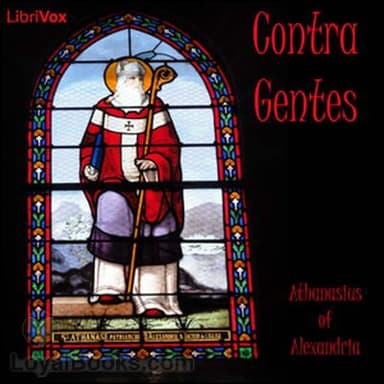
Athanasius of Alexandria's *Contra Gentes* stands as one of the most influential apologies of early Christian thought, written before the theological upheaval of the Arian controversy reshaped the church. This foundational work systematically examines pagan religious beliefs and practices, offering a sophisticated critique that ultimately prepares listeners for a sweeping defense of Christian theology.
The text unfolds in two complementary movements. First, Athanasius dismantles the philosophical and theological foundations of Greco-Roman paganism, exposing the contradictions and moral failings embedded in polytheistic worship. Then, in a decisive turn, he presents the Christian alternative—an elegant exposition of God's nature and the doctrine of creation through the eternal Word. This argument becomes the crucial stepping stone toward understanding the incarnation of Christ, the subject of his companion volume.
Written during a pivotal moment in early Christian history, *Contra Gentes* captures Athanasius at his rhetorical and theological best, employing rigorous logic and accessible language to defend Christianity against its most serious intellectual challengers. For students of patristic theology, historians of ancient philosophy, and anyone seeking to understand how early Christian thinkers engaged with their pagan world, this ancient text remains remarkably relevant. It offers profound insights into the development of Christian doctrine during Christianity's formative centuries.