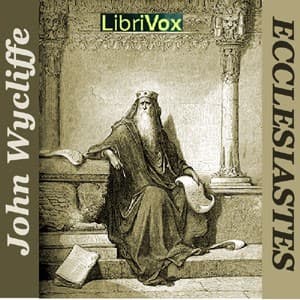
About this book
John Wycliffe's remarkable 1395 translation of Ecclesiastes offers a window into medieval religious thought and biblical interpretation. This ancient text, traditionally attributed to Solomon around 950 BCE but likely composed centuries later, presents a profound meditation on the futility of human striving and the search for meaning in an uncertain world.
Through the voice of the Preacher, Ecclesiastes explores life's deepest questions with unflinching honesty. Wycliffe's translation captures the original's raw emotional power—flashes of despair, resentment, and unexpected humor that cut through centuries to resonate with modern listeners. The archaic Middle English language adds authenticity and gravitas, allowing readers to experience the text as medieval Christians encountered it.
This version represents a significant moment in biblical translation history. John Purvey's mid-1390s revision of Wycliffe's original work introduced accessibility without sacrificing literary richness. Notably, Wycliffe's chapter divisions sometimes diverge from later versions like the King James, offering fresh perspectives on familiar passages.
Ecclesiastes speaks to anyone grappling with life's purpose—whether approaching from a position of firm faith, spiritual questioning, or secular curiosity. The Preacher's meditations provide unexpected comfort precisely because they refuse easy answers. Perfect for scholars of biblical history, those seeking contemplative literature, or anyone drawn to ancient wisdom literature that remains strikingly relevant today.