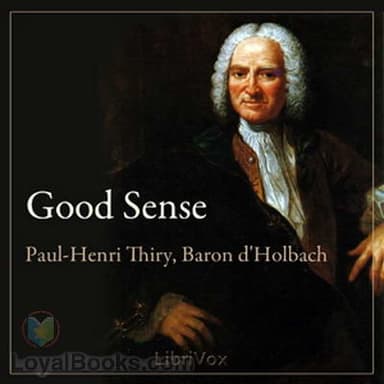
Baron Paul Henri Thiry d'Holbach's Good Sense presents a provocative philosophical challenge to religious orthodoxy that remains strikingly relevant today. Originally published as Le Bon Sens in 1772, this enlightenment treatise distills the author's masterwork Système de la Nature into a clear, accessible argument for rational thinking over supernatural belief.
D'Holbach contends that human morality and social order need not depend on religious doctrine. Instead, he argues, reason, philosophy, and natural law provide sufficient guides for virtue and ethical behavior. The Baron systematically examines how superstition—rather than atheism—destabilizes societies and corrupts human judgment, examining the psychological mechanisms through which religious institutions maintain power over the minds of ordinary people.
This is not a work of mere negativity, but rather a passionate defense of human autonomy and intellectual freedom. D'Holbach writes with clarity and precision, making complex philosophical arguments accessible without sacrificing rigor. His observations on how religious authority functions as an instrument of control remain worth serious consideration.
Good Sense appeals to anyone curious about Enlightenment philosophy, the history of free thought, or the enduring tensions between reason and faith. Whether you approach it as a historical document or as a contemporary challenge to unexamined belief, this audiobook offers a stimulating intellectual experience that invites reflection on the foundations of morality, authority, and human flourishing.