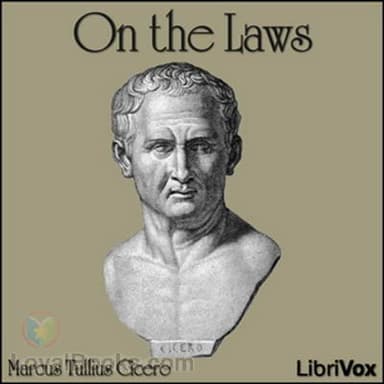
About this book
Marcus Tullius Cicero's On the Laws stands as one of ancient Rome's most profound philosophical explorations of justice and governance. Structured as an elegant dialogue between Cicero, his brother Quintus, and his friend Atticus, this classical masterwork delves into the fundamental nature of law itself rather than merely cataloging legal codes. Drawing inspiration from Plato's philosophical method, Cicero constructs a thoughtful examination of natural law, divine authority, and the principles that should govern a just society.
Building upon his earlier work On the Commonwealth, On the Laws addresses the urgent reforms needed to preserve the Roman Republic. The conversation ranges from the mythological foundations of civilization to the practical mechanics of political offices and voting systems. Cicero's genius lies in his insistence that true law must be grounded in reason and morality, serving as a reflection of eternal divine order rather than arbitrary human invention.
This philosophical and political treatise reveals Cicero's conviction that understanding law's deeper purpose is essential for any citizen seeking to comprehend the backbone of civilization itself. Perfect for those interested in political philosophy, classical rhetoric, or the intellectual foundations of Western legal thought, this timeless dialogue remains remarkably relevant to contemporary debates about justice, governance, and the social contract. Experience one of antiquity's greatest minds grappling with questions that still resonate today.